
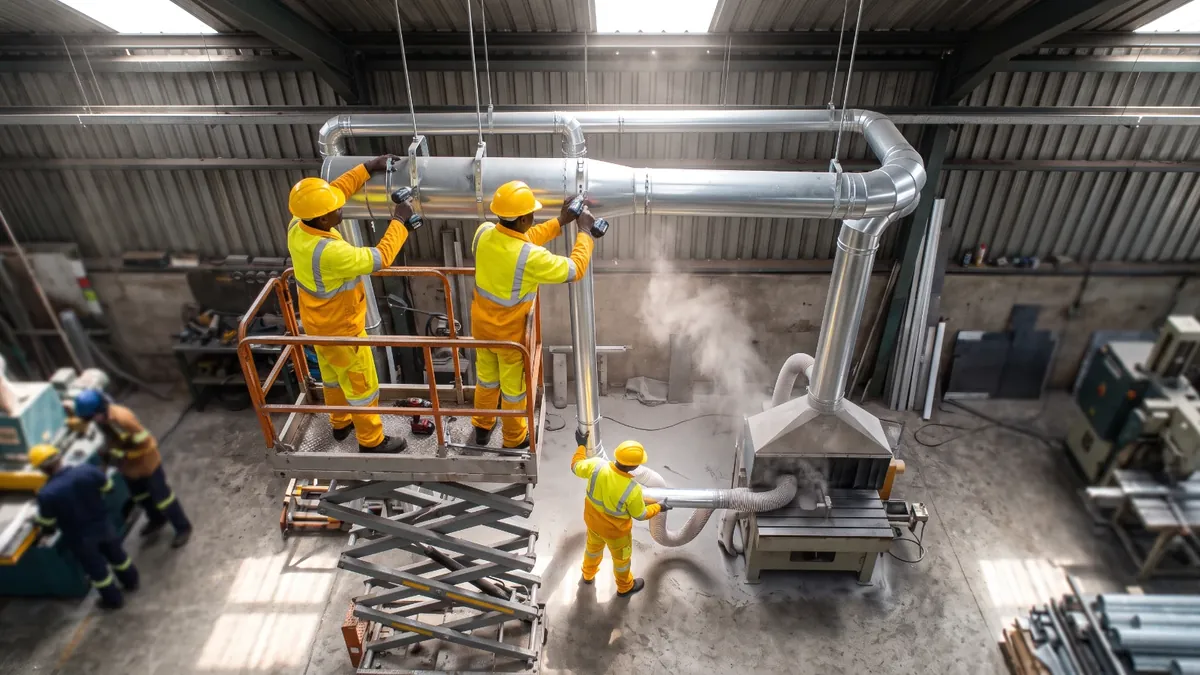
Dust Extraction South Africa helps you find the best quote, fast, on dust extraction, fume extraction and extractor fan work across South Africa. Say what you cut, grind, weld or spray and how many machines need extracting, and companies that cover your area reply with prices you can line up side by side.
Super easy & fast
- One brief instead of five site visits, so you are not repeating yourself.
- Extraction companies who work in your province, not a national call centre.
- Ballpark figures below, so you can tell a fair quote from a hopeful one.
- From LEADERR APPROVED providers, vetted and backed by many verified 5-star reviews. Peace of mind that the system is sized to your machines.
- No charge to you, and no obligation to accept any of the quotes.
Describe the workshop once and get the best quote, fast.
Get the Best QuoteDust Extraction Prices in South Africa
Ballpark ranges across the common jobs, so you can check a quotation.
| Item | Ballpark price |
|---|---|
| Single machine extraction point, installed | R8,000 - R22,000 |
| Small workshop system, three to five machines | R45,000 - R140,000 |
| Factory dust plant, bag or cartridge | R450,000 - R2,500,000 |
| Single bag collector, 1.5kW, supplied | R9,000 - R26,000 |
| Cyclone and bag unit, 3kW to 5.5kW, supplied | R28,000 - R85,000 |
| Cartridge unit, small shop, supplied | R45,000 - R160,000 |
| Portable extractor, single bag | R6,500 - R18,000 |
| Galvanised spiral ducting, 150mm, per metre installed | R450 - R1,100 |
| Welding extraction arm, 2m to 3m, supplied | R9,000 - R32,000 |
| Enclosed panel or prep bay booth | R120,000 - R420,000 |
| Bathroom extractor fan, supplied and fitted | R1,400 - R4,500 |
| Kitchen canopy and duct clean, medium kitchen | R4,500 - R14,000 |
| Filter bag, polyester, each supplied | R180 - R650 |
| System survey and airflow report | R6,500 - R35,000 |
Prices JUST UPDATED. Ballpark figures, rounded, excluding VAT. They reflect typical South African dust extraction, fume and ventilation rates. They are not our prices or quotations, and no provider is bound by them.
What Providers Quote For
| Job | Typical scope |
|---|---|
| Dust extraction systems | Collector, ducting and hoods, sized to the machines that run together. |
| Dust collectors | Bag, cartridge and cyclone units supplied, set, wired and proven. |
| Baghouse and cartridge filters | New plant, rebags and cartridge sets for existing collectors. |
| Fume extraction | Welding arms, benches and central systems that capture at the source. |
| Spray booths | Open face, prep bay and full vehicle booths, with or without a bake. |
| Extractor fans | Wall, ceiling, inline and roof fans installed, repaired and serviced. |
| Cleaning and refurbishment | Kitchen canopies degreased, and tired plant surveyed and rebuilt. |
How Extraction Is Priced
- By the airflow it has to move. Added up at the machines, which is what sets the fan and the filter.
- Not by the size of the building. A small shop with four sanders needs more air than a large empty one.
- By the machines running together. Not by how many you own, which is the commonest way a quote is inflated.
- Per metre on ducting. Diameter and bends, plus a gate and a hood at every machine.
- Per filter on the running cost. Bags and cartridges are bought again, so they belong in the comparison.
Which Collector You Need
- Fine dry dust suits cartridges. Far more filter area in a small box, cleaned by pulse jet.
- Heavy or abrasive dust suits bags. A baghouse is rebagged rather than replaced, and takes the load.
- Chips and shavings suit a cyclone. The spin does the work, and it saves the filter behind it.
- Fume needs capture at the source. An arm at the arc, not a fan in the roof, because fume is breathed first.
- One or two machines suit a portable. A fraction of a fixed system, as long as they run one at a time.
What Makes a System Underperform
- The ducting, nearly always. Undersized pipe, tight bends and leaks cost the pressure the fan was sold with.
- Open blast gates. Every unused branch left open steals air from the machine that is running.
- Filters that are blinding. Usually because the cleaning system has quietly stopped firing.
- A fan sized for every machine. Or for none of them, which is the same mistake in the other direction.
- Hoods that do not catch. The best collector in the country cannot extract what the hood misses.
Get prices for your own setup rather than a range.
Get the Best QuoteWhat to Include in Your Request
- The address. Suburb and town, so a company knows whether they work there.
- The machine list. What they are and what the extraction port on each measures.
- How many run together. The number running at once, not the number you own.
- What the dust or fume is. Wood, MDF, metal, powder, welding fume or paint overspray.
- The building. Roof height, whether a unit can stand outside, and where power is.
- Whether this is new or existing. A plant that already exists and underperforms is a different job.
Before You Accept a Quote
- Check the airflow it is priced on. Two quotes that differ by half are usually sizing differently.
- Check what the filter area is. Fewer bags or cartridges is a cheaper unit and a shorter life.
- Check whether ducting is in it. It is routinely the larger half and routinely quoted separately.
- Check who does the electrical work. An isolator, a starter and a cable run are a real cost.
- Check that commissioning is included. Measured airflow at the machines at handover, in writing.
Where Extraction Is Needed Most
- Joinery and furniture shops. Saws, sanders and routers, which between them make the finest dust.
- Metal fabrication. Grinding dust and welding fume, which need different answers.
- Paint and powder coating. Booths and overspray filtration, with their own air supply.
- Food and milling. Fine organic dust, where damp and explosion risk both have to be designed for.
- Commercial kitchens. Canopies, ducts and fans, where grease is a fire path before it is a smell.
Frequently Asked Questions
How much does a dust extraction system cost in South Africa?
A single machine point installed is commonly R8,000 to R22,000. A small workshop system serving three to five machines usually lands between R45,000 and R140,000, and a factory plant runs from about R450,000 upward. Airflow, duct length and filter type move it more than anything else.
How do I work out what size system I need?
Add the airflow each machine needs at its own extraction port, then allow for the machines that run at the same time rather than all of them. That total is what sizes the fan and the filter area, and it is the number to ask every quote to state.
Can one collector serve the whole workshop?
Usually yes, with ducting and blast gates, as long as the fan is sized for the machines running together. Where machines sit far apart, or the dust types should not mix, two smaller systems often cost less than one large one.
Cartridge filter or bag filter?
Cartridges pack far more filter area into a small box and suit fine, dry workshop dust. Bags suit heavy loads, abrasive dust, higher temperatures and anything damp or sticky. The dust decides it more than the budget does.
Why does my extraction seem weak at one machine?
Open blast gates elsewhere in the shop first, then leaks in the ducting, then a branch that was never sized for the run. Balancing the gates and sealing the joints fixes more of these complaints than a bigger fan does.
Does the extracted air have to be discharged outside?
Not always. A filtered unit can return clean air to the building, which keeps the heat in, but it needs a higher grade of filtration and what is permitted depends on the dust and on your own workplace rules. Discharging outside is simpler and is what most workshops do.
Is welding fume extraction different to dust extraction?
Yes. Fume has to be captured at the source, with an arm, a bench or an on-torch extractor, because fume that reaches the roof has already been breathed. The filter grade also depends on what you weld, since stainless and coated steel are more hazardous than mild steel.
How often do filters need replacing?
Bags commonly run two to five years and cartridges one to three on dry workshop duty. Fine, damp or sticky dust shortens both sharply, and a cleaning system that has stopped firing can blind a brand new set within months.
Is there a charge for using this site?
No. Send the workshop details once and the extraction companies who cover your area reply with their own prices. You are not committed to any of them and nothing is charged to you for the introduction.
Dust Extraction in South Africa
Choose the work you need quoted
Extraction Systems and Ducting
Extraction Systems
The whole installation: collector, ducting and a hood at every machine.
Collector Installation
Bag, cartridge and cyclone units set, wired, connected and proven.
Ducting Installation
Spiral ducting, long radius bends and a blast gate at each machine.
Mobile Extractors
Units on wheels for one or two machines, at a fraction of a fixed system.
Filters and Collectors
Baghouse Filters
Fabric filter plant for heavy loads, and rebags for the plant you have.
Cartridge Collectors
Pleated cartridges for fine dry dust where there is no room for bags.
Dust Cyclones
Centrifugal separators that drop the heavy fraction before the filter.
Fume and Paint Extraction
Fume Extraction
Welding arms, benches and systems that capture fume at the arc.
Spray Booths
Open face, prep bay and full vehicle booths, with or without a bake.
Extractor Fans and Cleaning
Extractor Fan Installation
Wall, ceiling, inline and roof fans vented properly to outside air.
Extractor Fan Repairs
Noisy, weak or dead fans diagnosed, with repair and replace priced.
Extractor Cleaning
Kitchen canopies, ducting and fans degreased, with a photo report.
Plant That Has Gone Wrong
Collector Repairs
Blinded filters, dead pulse valves and worn fans put right.
System Refurbishment
Tired plant surveyed, then rebuilt or resized for the machines it serves.
Get the Best Quote, Fast
Client Reviews
Powered by leaderr