
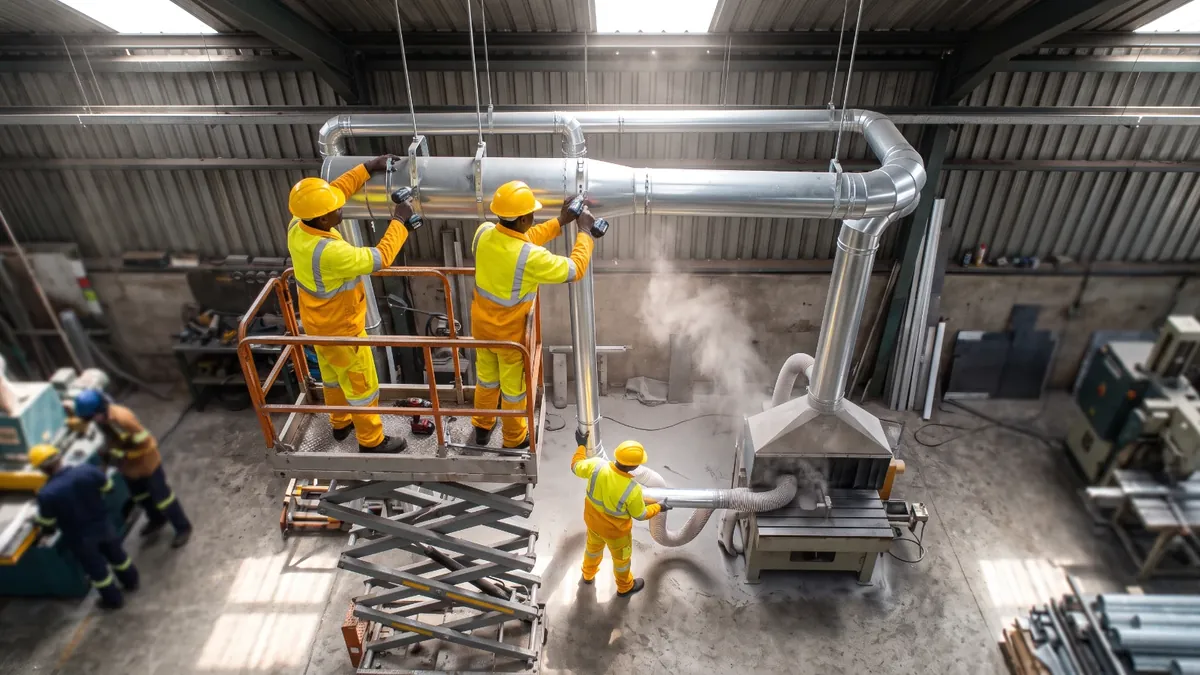
Baghouse Filters South Africa are the fabric filter plant that most heavy dust loads end up on: rows of bags in a housing, cleaned by pulse jet, reverse air or shaker. They suit high airflow and abrasive dust, and they are rebagged rather than replaced. Say what the airflow and the dust are, and compare quotations for new plant or a rebag.
Super easy & fast
- Know what a bag and a cage should cost fitted, so you never pay too much.
- Send the same airflow details to several extraction companies, and quotes come back fast.
- From LEADERR APPROVED providers, vetted and backed by many verified 5-star reviews. Peace of mind that the filter area is sized to your dust and not to a price point.
Say what the airflow and the dust are, and get baghouse quotes.
Get the Best QuoteBaghouse Filters Prices
Ballpark figures so you can check a quotation.
| Item | Ballpark price |
|---|---|
| Filter bag, polyester, each supplied | R180 - R650 |
| Filter bag, coated or high temperature, each | R600 - R2,400 |
| Filter cage, each supplied | R250 - R900 |
| Rebag labour, per bag fitted | R150 - R500 |
| Small baghouse plant, supplied and installed | R180,000 - R650,000 |
| Medium baghouse plant, supplied and installed | R650,000 - R2,800,000 |
| Pulse valve and diaphragm, each fitted | R900 - R3,500 |
| Inspection and filter condition report | R3,500 - R15,000 |
Prices JUST UPDATED. Ballpark figures, rounded, excluding VAT. They reflect typical South African dust extraction, fume and ventilation rates. They are not our prices or quotations, and no provider is bound by them. An extraction system is quoted on the AIRFLOW IT HAS TO MOVE and the machines running at the same time, not on the floor area of the building, so confirm what each quotation includes, such as the airflow it is sized for, the ducting, the hoods at each machine and the electrical connection.
What a Baghouse Quote Covers
- Filter area. Bag length, diameter and count, which is what you are buying.
- The fabric. Polyester, PTFE coated, aramid or antistatic, chosen for the dust.
- The cleaning system. Pulse jet, reverse air or shaker, with its valves and timer.
- The housing and hopper. Plate thickness, access doors and how the dust is discharged.
- The fan and the stack. Sized for the airflow with the filter resistance allowed for.
Where Quotes Differ Most
- Air to cloth ratio. The single number that decides whether the plant lasts or blinds.
- Bag fabric. A coated or high temperature bag can cost several times a plain one.
- Cage quality. Thin or rusting cages tear bags and are a false economy.
- Whether it is a rebag. New plant, a rebag or a cage and bag set are three prices.
- Access and height. Roof mounted plant needs a platform and a safe way up to it.
How a Rebag Runs on Site
- The plant is isolated and emptied. Power and compressed air locked off, hopper cleared.
- Old bags and cages come out. Bagged as waste, which is a cost on some dusts.
- The tube sheet is checked. Holes that have worn oval are where the next leak starts.
- New cages and bags go in. Seated and clamped one by one, which is most of the labour.
- Cleaning and airflow are proven. Valves fired in sequence and airflow measured.
Get a price for your own plant rather than a range.
Get the Best QuoteWhat Affects the Price
- The airflow. Filter area follows airflow, and filter area is most of the price.
- The dust. Abrasive, sticky, damp or hot dust each push the fabric choice up.
- The temperature. Hot gas rules out polyester and the alternatives cost more.
- How many bags. A rebag is priced per bag, so the count matters more than the plant size.
- Whether cages are reused. Sound cages save a meaningful part of a rebag.
- Access. Platforms, scaffold and confined space work all add labour.
What to Include in Your Request
- The address. Suburb and town, so a company knows whether they work there.
- The airflow. In cubic metres an hour if you have it, or the fan motor rating.
- The dust. What it is, how fine it is and whether it is damp, hot or sticky.
- The bag count and size. Off the plant drawing or counted through the access door.
- The cleaning system. Pulse jet, reverse air or shaker, and whether it fires.
- Whether this is new plant or a rebag. Two very different quotations.
Before You Appoint a Supplier
- Ask for the air to cloth ratio. A number that is too high is why plant blinds early.
- Ask what fabric is quoted. Plain polyester against a coated bag is not a like for like price.
- Ask whether cages are included. Bags fitted to tired cages tear within months.
- Ask about the tube sheet. Worn holes leak dust past brand new bags.
- Ask who disposes of the old bags. On some dusts that is a controlled waste cost.
- Ask for the measured airflow after. Before and after, so the rebag can be judged.
Baghouse Filters FAQs
What does it cost to rebag a baghouse?
Bags run about R180 to R650 each in polyester and R600 to R2,400 coated, cages R250 to R900, and fitting roughly R150 to R500 a bag. On a hundred bag plant that commonly puts a full rebag with cages between R60,000 and R200,000.
How long do filter bags last?
Two to five years is common on clean, well cleaned duty. Abrasive, damp or sticky dust shortens it sharply, and a cleaning system that has stopped firing can blind a new set within months. The cleaning system is usually what decides it.
What is air to cloth ratio and why does it matter?
It is the airflow divided by the filter area, and it is the number that separates plant that runs for years from plant that blinds. A quote that is cheaper because it has fewer bags is usually buying a higher ratio, so ask for the figure on both.
Baghouse or cartridge filter?
Baghouses suit high airflow, heavy loads, abrasive dust and higher temperatures, and they are rebagged rather than scrapped. Cartridges give far more filter area in a smaller box and suit fine, dry dust in a workshop. The dust and the space usually decide it.
Can the old cages be reused?
If they are straight, not rusted and have no sharp edges, yes, and it saves a real part of the cost. A cage that has corroded or bent will cut the new bag, so they are inspected one by one rather than reused by default.
Baghouse plant is normally bought as part of a wider installation on Dust Extraction South Africa so it is worth pricing the whole system in one request.
Related Services
Get the Best Quote, Fast
Client Reviews
Powered by leaderr