
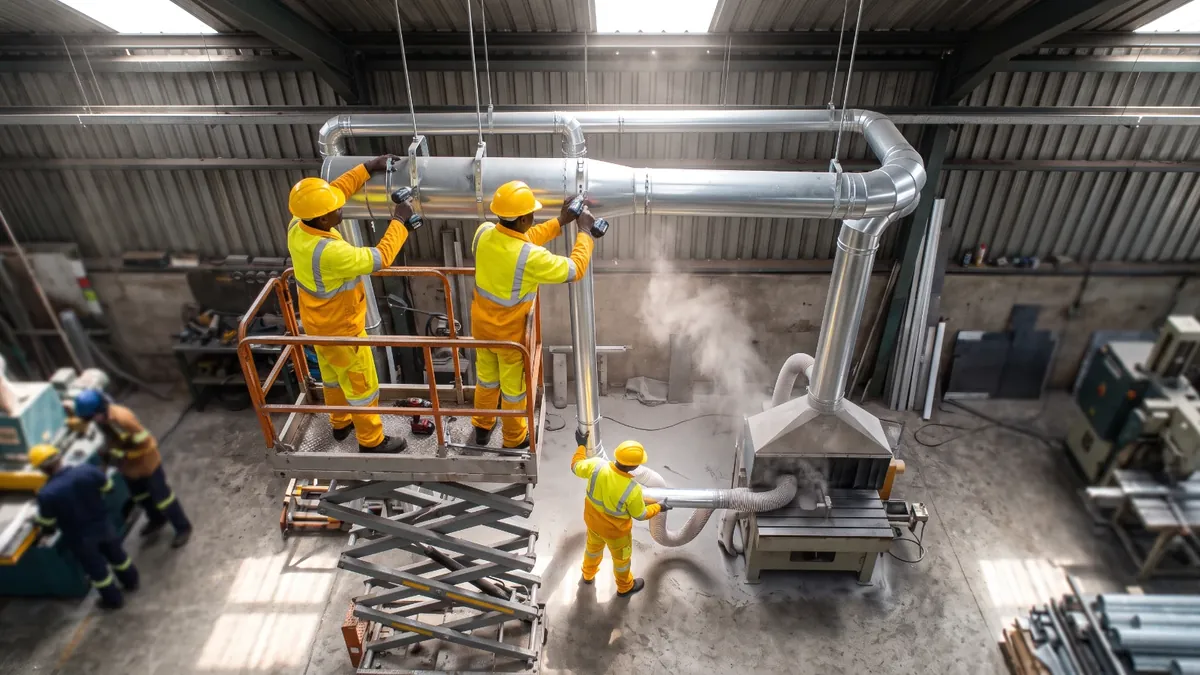
Cartridge Dust Collectors South Africa use pleated cartridges instead of bags, which packs several times the filter area into the same box. They suit fine, dry dust in a workshop where there is no room for a baghouse, and they are cleaned by pulse jet. Say how fine the dust is and what the airflow is, and compare quotations.
Super easy & fast
- Know what a cartridge should cost fitted, so you never pay too much.
- Send the same dust details to several extraction companies, and quotes come back fast.
- From LEADERR APPROVED providers, vetted and backed by many verified 5-star reviews. Peace of mind that the cartridge grade is matched to your dust.
Say how fine the dust is, and get cartridge collector quotes.
Get the Best QuoteCartridge Dust Collectors Prices
Ballpark figures so you can check a quotation.
| Item | Ballpark price |
|---|---|
| Cartridge, cellulose, each supplied | R1,200 - R3,200 |
| Cartridge, nanofibre or spunbond, each | R2,500 - R7,500 |
| Cartridge replacement labour, each | R300 - R1,100 |
| Small cartridge unit, supplied | R45,000 - R160,000 |
| Medium cartridge unit, supplied | R160,000 - R600,000 |
| Installation of a cartridge unit | R12,000 - R90,000 |
| Spark arrestor or drop-out box | R15,000 - R85,000 |
| Compressed air connection and dryer | R8,000 - R45,000 |
Prices JUST UPDATED. Ballpark figures, rounded, excluding VAT. They reflect typical South African dust extraction, fume and ventilation rates. They are not our prices or quotations, and no provider is bound by them. An extraction system is quoted on the AIRFLOW IT HAS TO MOVE and the machines running at the same time, not on the floor area of the building, so confirm what each quotation includes, such as the airflow it is sized for, the ducting, the hoods at each machine and the electrical connection.
What a Cartridge Quote Covers
- The cartridges. Count, size and media grade, which is most of the running cost.
- The housing. Floor standing or wall mounted, with the hopper under it.
- The pulse system. Valves, manifold, timer and the compressed air it needs.
- The fan. Sized for the airflow with the cartridge resistance allowed for.
- Discharge. Bin, bag or drum under the hopper, and how often it is emptied.
Where Quotes Differ Most
- Media grade. Cellulose, spunbond and nanofibre are three prices and three lifespans.
- Cartridge count. Fewer cartridges is a cheaper unit and a shorter filter life.
- Whether air is returned. Filtered return needs a higher grade and often a safety filter.
- Spark protection. Some dusts need a spark arrestor or a drop-out box ahead of the unit.
- Compressed air. A shop with no compressor has to buy one for the pulse cleaning.
How the Work Runs on Site
- The position is agreed. Close to the machines, with room to pull cartridges out.
- The unit is set and wired. Isolator, starter and rotation checked before load.
- Compressed air is connected. With a dryer or a trap, because wet air ruins cartridges.
- Ducting is connected and balanced. Gates set so each machine gets its share.
- Airflow is measured at each hood. The figure to keep for the next service.
Get a price for your own workshop rather than a range.
Get the Best QuoteWhat Affects the Price
- How fine the dust is. Fine dust needs a finer media, which costs more and loads faster.
- Whether the dust is dry. Damp or oily dust blinds pleats and rules cartridges out.
- The airflow. Cartridge count follows airflow, and cartridges are the recurring cost.
- Returned or discharged air. Returning air into the shop raises the grade required.
- Whether there is compressed air. No compressor means buying one, or a shaker unit instead.
- Headroom. Cartridges are withdrawn upward or sideways, and that space has to exist.
What to Include in Your Request
- The address. Suburb and town, so a company knows whether they work there.
- What the dust is. Wood, MDF, metal, powder coat, plastic or composite.
- How fine it is. Visible chips, flour fine, or a haze that hangs in the air.
- The airflow. If you have it, or the machines it has to serve.
- Whether the air returns. Back into the shop or discharged outside.
- Compressed air. Whether you have a compressor, and its size.
Before You Appoint a Supplier
- Ask what media grade is quoted. Cellulose and nanofibre are not the same running cost.
- Ask what a cartridge costs. You will buy them again, so the unit price is not the whole price.
- Ask how many cartridges. A unit with fewer is cheaper to buy and dearer to run.
- Ask about the compressed air. Dry air, at the right pressure, or the pulse cleaning fails.
- Ask whether the dust is suitable. Damp, oily or stringy dust belongs on bags, not pleats.
- Ask about spark risk. Grinding and some woods want a drop-out box ahead of the filter.
Cartridge Dust Collectors FAQs
What does a cartridge dust collector cost?
A small workshop unit is commonly R45,000 to R160,000 supplied, with installation from about R12,000. Cartridges themselves run roughly R1,200 to R3,200 in cellulose and R2,500 to R7,500 in nanofibre, which is the cost you meet again every year or two.
How long do cartridges last?
One to three years on dry workshop dust with working pulse cleaning. Fine dust shortens it, and damp or oily dust can blind a set in weeks, which is why cartridges are the wrong choice on those duties.
Cartridge or bag filter?
Cartridges pack far more filter area into a small box and suit fine, dry dust where space is short. Bags suit heavy loads, abrasive dust, higher temperatures and anything damp. The dust decides it more than the budget does.
Can filtered air be returned into the workshop?
Often, and it keeps the heat in, which matters on a Highveld winter morning. It needs a higher grade of media and usually a safety filter after the cartridges, and what is allowed depends on the dust and on your own workplace rules.
Do cartridges need compressed air?
Pulse jet cleaning does, and it must be dry. Wet air turns the dust on the pleats into a paste and the cartridges are finished. A shop with no compressor either buys one or chooses a shaker cleaned unit instead.
A cartridge unit is usually chosen as part of a wider installation on Dust Extraction South Africa so it is worth pricing the ducting and the hoods at the same time.
Related Services
Get the Best Quote, Fast
Client Reviews
Powered by leaderr