
How many machines?
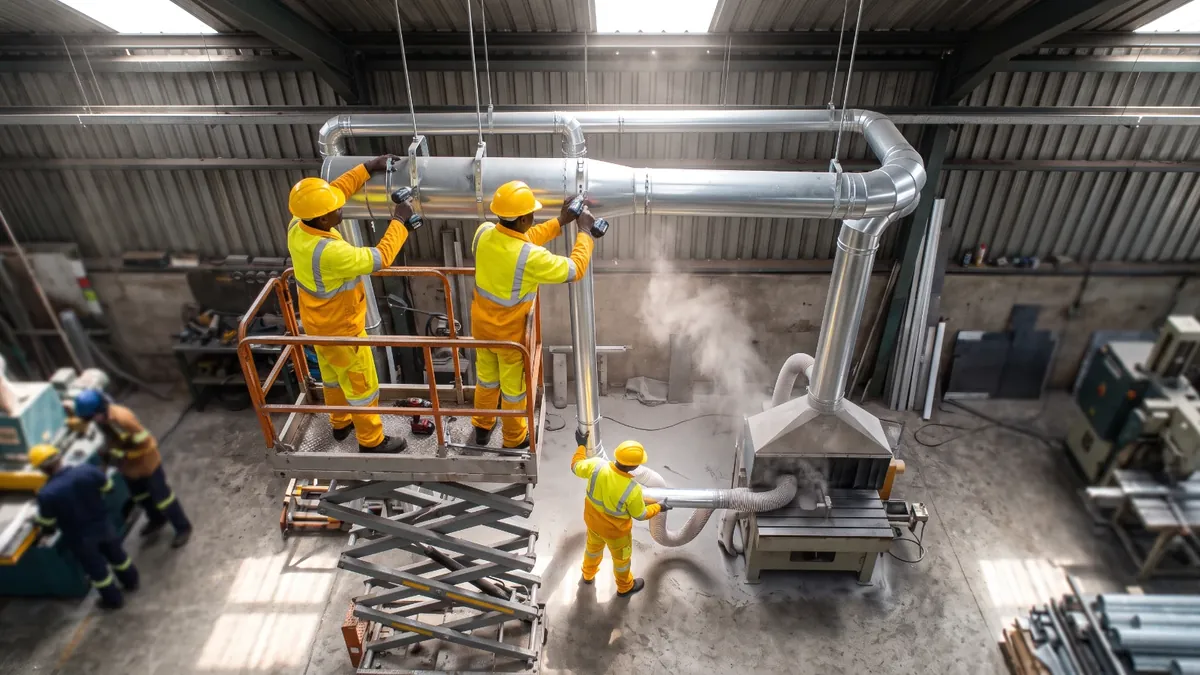
Dust Extraction Systems South Africa is the whole installation: the collector, the ducting that reaches every machine and the fan that moves the air. It is quoted on the airflow it has to shift and the number of machines it has to serve, not on the size of your building. Say what you cut, grind or sand and how many points need extracting, and get priced quotations to compare.
Super easy & fast
- Know what an extraction point should cost, so you never pay too much.
- Send the same workshop details to several extraction companies, and quotes come back fast.
- From LEADERR APPROVED providers, vetted and backed by many verified 5-star reviews. Peace of mind that the system is sized to your machines and not to a catalogue.
Say how many machines need extracting, and get system quotes.
Get the Best QuoteDust Extraction Systems Prices
Ballpark figures so you can check a quotation.
| Item | Ballpark price |
|---|---|
| Single machine extraction point, installed | R8,000 - R22,000 |
| Small workshop system, three to five machines | R45,000 - R140,000 |
| Medium shop system, six to twelve machines | R140,000 - R420,000 |
| Factory system, bag or cartridge plant | R450,000 - R2,500,000 |
| System design and airflow calculation | R6,000 - R35,000 |
| Galvanised spiral ducting, 150mm, per metre installed | R450 - R1,100 |
| Blast gate at a machine, fitted | R900 - R3,200 |
| Commissioning and airflow test | R4,500 - R18,000 |
Prices JUST UPDATED. Ballpark figures, rounded, excluding VAT. They reflect typical South African dust extraction, fume and ventilation rates. They are not our prices or quotations, and no provider is bound by them. An extraction system is quoted on the AIRFLOW IT HAS TO MOVE and the machines running at the same time, not on the floor area of the building, so confirm what each quotation includes, such as the airflow it is sized for, the ducting, the hoods at each machine and the electrical connection.
What a System Quote Covers
- The collector. Bag, cartridge or cyclone unit, sized to the total airflow.
- The fan and motor. Chosen for the airflow and the resistance of the ducting run.
- The ducting. Spiral or folded seam, with bends and blast gates to each machine.
- The hoods and pickups. What sits at each machine, which decides how much dust is caught.
- Filter handling. Where the collected dust drops, and how it leaves the building.
Where Quotes Differ Most
- How many machines run at once. A system for four machines at once is not four single units.
- The duct run. Length, bends and height drive the fan size more than the machines do.
- Filter type. Bags, cartridges and a cyclone ahead of them are three different totals.
- Where the air goes. Discharged outside or filtered and returned changes the unit.
- Noise and housing. An outdoor unit, an acoustic enclosure and a roof platform each cost.
How the Work Runs on Site
- The machines are measured first. Each port diameter and its airflow, which sets the total.
- The route is marked. The shortest run with the fewest bends, clear of cranes and doors.
- The unit is set and the fan wired. Usually the day the workshop has to stand still.
- Ducting goes up and is balanced. Blast gates set so each machine gets its share.
- Airflow is checked at each hood. The only proof the design does what it was sold as.
Get a price for your own workshop rather than a range.
Get the Best QuoteWhat Affects the Price
- How many machines. Every extra point adds ducting, a gate and airflow to the fan.
- How much air each needs. A wide belt sander asks for several times what a drop saw does.
- How far the collector sits. Distance and bends cost pressure, and pressure costs motor size.
- What the dust is. Wood, metal, composite and food dust do not share a filter choice.
- Indoor or outdoor plant. Outside needs weatherproofing, a base and a longer run.
- Three phase or single. Anything above about 4kW wants three phase, which some shops lack.
What to Include in Your Request
- The address. Suburb and town, so an installer knows whether they work there.
- The machine list. What they are and what the extraction port on each measures.
- How many run together. The number running at once, not the number you own.
- What the dust is. Wood, MDF, metal, plastic, fibreglass or food, and roughly how much.
- The building. Height to the roof, whether the unit can stand outside and where power is.
- Your timing. Whether the shop can stand still for a day, and when.
Before You Appoint an Installer
- Ask for the airflow at each machine. A design that names a number per hood can be checked.
- Ask what the filter area is. Undersized filters blind quickly and the system slows.
- Ask where the dust is discharged. Bags, a bin or a silo, and who empties it.
- Ask about the noise. Fans are loud, and a unit next to a neighbour becomes a complaint.
- Ask to see a system they built. Two or three years old, running, with the gates still working.
- Ask what is not in the price. Electrical work, a concrete base and roof penetrations are the usual ones.
Dust Extraction Systems FAQs
How much does a dust extraction system cost in South Africa?
A single machine point installed is commonly R8,000 to R22,000. A small workshop system serving three to five machines usually lands between R45,000 and R140,000, and a factory plant runs from about R450,000 upward. Airflow, duct length and filter type move it more than anything else.
How do I know what size extractor I need?
Add the airflow each machine needs at its port, then allow for the ones that run at the same time rather than all of them. A designer converts that into a fan and a filter area. Guessing by motor size is how an undersized unit gets bought.
Can one extractor serve the whole workshop?
Usually yes, with ducting and blast gates, as long as the fan is sized for the machines running together. Where machines are far apart or the dust types must not mix, two smaller systems often cost less than one large one.
Does the extracted air have to go outside?
Not always. A filtered unit can return clean air to the building, which keeps the heat in, but it depends on the dust and on what your own workplace rules require. Discharging outside is simpler and is what most workshops do.
How long does an installation take?
A single point is often a day. A small workshop system is commonly three days to a week on site, and a factory plant several weeks. The design and the lead time on the unit usually take longer than the installation does.
Extraction systems are the service most companies on Dust Extraction South Africa are asked for first, and the one most worth lining up quotations on.
Related Services
Get the Best Quote, Fast
Client Reviews
Powered by leaderr