
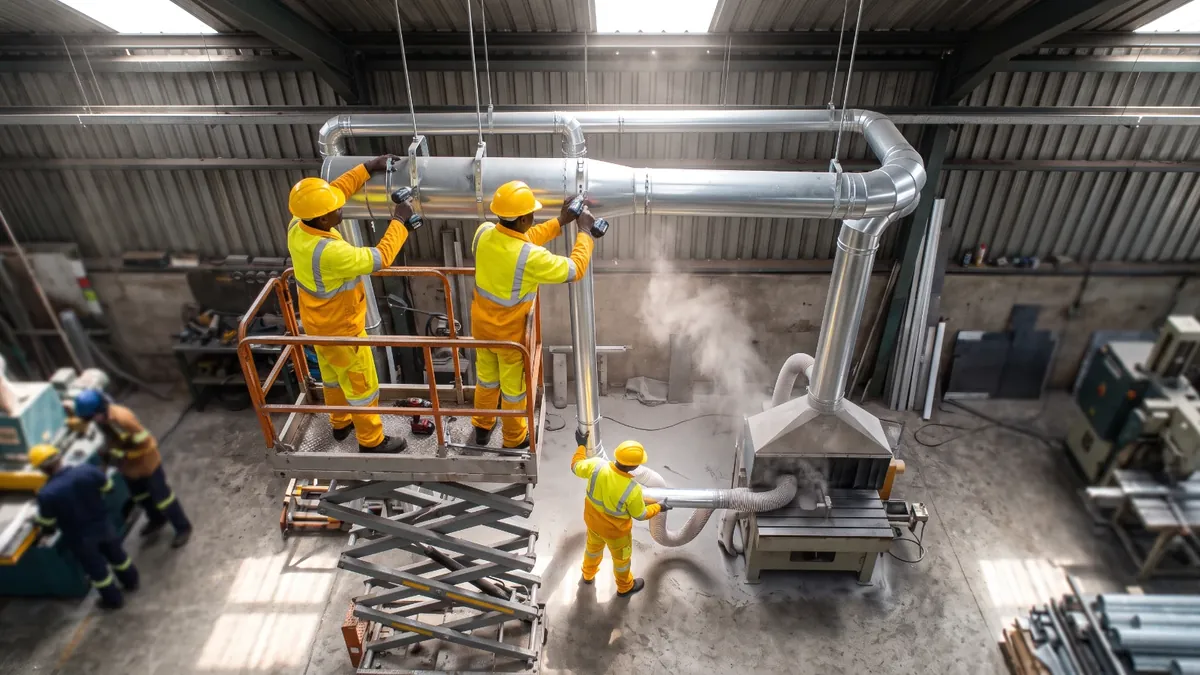
Dust Extraction Woodstock is work where quotations differ more than most, because the airflow, the kind of dust and the length of the duct run all move the price. Send the details once and price several extraction companies against each other.
Super easy & fast
- The best price from a company that already works near Woodstock, so getting the unit, the ducting and the installers to site does not push the quote up.
- Send your details once, and watch the quotes come in.
- From LEADERR APPROVED providers, vetted and backed by many verified 5-star reviews. Pick a dust extraction company in Woodstock you can trust.
Send the workshop's details once rather than repeating them on the phone.
Get the Best QuoteDust Extraction Woodstock Prices
What extraction usually costs, so you have something to check a quote against.
| Item | Ballpark price |
|---|---|
| Single machine extraction point, installed | R8,000 - R22,000 |
| Small workshop system, three to five machines | R45,000 - R140,000 |
| Factory dust plant, bag or cartridge | R450,000 - R2,500,000 |
| Single bag collector, 1.5kW, supplied | R9,000 - R26,000 |
| Cyclone and bag unit, 3kW to 5.5kW, supplied | R28,000 - R85,000 |
| Cartridge unit, small shop, supplied | R45,000 - R160,000 |
| Portable extractor, single bag | R6,500 - R18,000 |
| Galvanised spiral ducting, 150mm, per metre installed | R450 - R1,100 |
| Welding extraction arm, 2m to 3m, supplied | R9,000 - R32,000 |
| Enclosed panel or prep bay booth | R120,000 - R420,000 |
| Bathroom extractor fan, supplied and fitted | R1,400 - R4,500 |
| Kitchen canopy and duct clean, medium kitchen | R4,500 - R14,000 |
| Filter bag, polyester, each supplied | R180 - R650 |
| System survey and airflow report | R6,500 - R35,000 |
Prices JUST UPDATED. Ballpark figures, rounded, excluding VAT. They reflect typical South African dust extraction, fume and ventilation rates. They are not our prices or quotations, and no provider is bound by them. An extraction system is quoted on the AIRFLOW IT HAS TO MOVE and the machines running at the same time, not on the floor area of the building, so confirm what each quotation includes, such as the airflow it is sized for, the ducting, the hoods at each machine and the electrical connection.
What Dust Extraction Companies in Woodstock Quote On
- The total airflow. The volume of air the system has to move with everything running that runs together. Two quotes for what sounds like the same workshop can differ by a factor of three because they assume different machines running at once, so say which do.
- What the dust is. Wood, board, metal, stone, flour, resin or paint mist. It sets the filter media, whether a cyclone goes in front, how the unit is cleaned and, with some dusts, whether explosion protection comes into it at all.
- How many machines, and where they stand. Each one adds a hood, a gate, a branch and some airflow. Machines spread down a long shop cost more in ducting than the same machines grouped at one wall.
- The duct run. Metres, diameter, number of bends and whether it runs at floor level or up in the roof. Working at height, through a roof sheet or over a live production line is a different price from a clear wall.
- Workshop or factory. A joinery with four machines and a plant with a sixty-point reticulation are the same trade and not the same job. The building also decides whether the unit stands outside, which is usually cheaper and quieter.
- Access, and when the work can happen. Whether a truck and a crane or forklift can reach the standing, how far the unit has to be moved by hand, and whether the shop can stop. Fitting over a weekend or at night is a real line on a quotation.
- What the industry around the place is. Furniture and joinery, metalwork and fabrication, panelshops running spray booths, milling and food plants are all served by different ends of this trade, so some companies are stronger on one than another. It is worth asking what they mostly do.
- What is not in the price. Electrical connection, the slab or frame, a roof penetration, spare filters, commissioning and airflow measurement are often quoted separately. Ask for them on the same page or the cheapest quotation will be the one that includes least.
What the Job Involves
- Working out the airflow. Every machine has a port and every port needs a certain volume of air moving through it before the dust leaves the blade rather than the floor. Add up the machines that run at the same time and you have the number the whole quotation hangs off.
- Choosing the collector. Bag units, cartridge dust collectors or a cyclone ahead of either, sized to that airflow and to the kind of dust. Fine sanding dust and coarse planer chips do not suit the same unit, and a unit chosen on price alone is the commonest reason a system disappoints.
- The fan, and where it sits. Sized to the airflow and to the resistance of the whole duct run, which is why a fan that worked in one shop does nothing in another. Putting it outside or in a housing is also what keeps the noise down.
- Setting out the ducting. The shortest sensible run to each machine, in the right diameter, with easy bends rather than sharp ones. Every extra metre and every tight elbow costs airflow, and undersized ducting cannot be fixed by a bigger fan.
- Hoods and blast gates. A hood that actually catches at each machine, and a gate so air is not pulled through the machines that are standing still. Gates are what let a smaller unit serve a bigger shop.
- Where the clean air goes. Back into the building or out through the wall. Returning filtered air keeps the heat in and the running cost down, but it only works if the filtration is right for the dust, so this is a decision rather than a detail.
- Where the dust comes out. A bag, a bin or a hopper, and who empties it and how often. A system nobody can empty easily stops being emptied, and then it stops pulling.
- Power, mounting and commissioning. The electrical connection, the starter, the slab or frame the unit stands on, and someone measuring the airflow at each machine once it runs. Ask for that last step in writing, because it is the only proof the design was met.
Turn those ballpark figures into a quotation for your own system.
Get the Best QuoteWhat Affects the Price
- The airflow the system has to move. Set by the machines that run at the same time. This is the figure the collector, the fan and the ducting are all sized off, so it is the biggest thing on the quotation and the one most often assumed rather than asked.
- The kind of dust. Fine sanding dust, coarse chips, welding fume, stone dust and paint mist need different filters and different units. The wrong media blinds in weeks and the system is then blamed for the fan.
- How much ducting, and of what size. Metres, diameter, bends and branches. Ducting is often half the installed price of a workshop system, and it is the half that gets cut to win a quote.
- Getting to the site and into the building. A company covering Woodstock prices access differently from one travelling across the province for one installation, and a unit that has to be carried in through a workshop door is not the same job as one a forklift can place.
- Whether the shop can stop. Work in production hours, over a weekend or at night. The same installation at night costs more and is sometimes the only way it can be done at all.
- Where the air and the dust go. Filtered air returned inside or vented out, and dust into a bag, a bin or a hopper. These change the unit, the ducting and the running cost rather than just the finish.
- The electrical work. A starter, a cable run and sometimes a bigger supply. A real cost, and a real reason one quotation is lower than another.
- Commissioning and what is guaranteed. Whether the airflow is measured at each machine when the system is handed over, and what is promised if it falls short. The cheapest quotes tend to leave this out entirely.
What to Include in Your Request
- The address. The suburb and street in Woodstock, so a company can tell at once whether they work there and what it costs to get the unit and the ducting in.
- The machine list. What the machines are and what the extraction port on each one measures. This is the single most useful thing you can send, and it beats any description of the workshop.
- How many run at the same time. The figure the whole system is sized on. Four machines with two ever running together is a much smaller job than four running all day.
- What the dust is. Timber, board, metal, stone, flour, resin or paint. Say if more than one, because mixing some of them in one system is not a good idea.
- A rough layout, or a photograph. Where the machines stand, where a wall or a door is, and how high the roof is. A phone photograph from the doorway tells an installer more than a paragraph.
- Whether there is a system now. A unit that is undersized, blocked or broken is a different quotation from an empty workshop, and some of the existing ducting may be worth keeping.
- Workshop or factory, and the hours. Whether it is a small shop or a production plant, and whether the work can happen while you are running.
- Your timing. When you need it working. Units are often imported or built to order, so a date tells a company whether to quote at all.
Before the First Duct Goes Up
- Ask what the ducting is. Diameter, material, how it is joined and how many bends. The cheapest quotation is usually the one with the thinnest ducting and the sharpest elbows.
- Ask whether commissioning is included. Someone measuring the airflow at each machine after it runs, and a sheet showing it. Without that nobody can say whether the design was met.
- Ask what the public liability cover is. A figure and a certificate, not a sentence in an email. The work involves height, hot work on ducting and your own plant standing still.
- Ask about noise and where the unit stands. Outside, in a housing or in the shop. It matters to your own people and it can matter to a neighbour, and moving it afterwards is expensive.
- Ask to see a shop they fitted a few years ago. Extraction shows its quality with time rather than on the day it is switched on. An older installation near Woodstock that still pulls is the reference worth having.
- Check the quotations describe the same system. The same airflow, the same unit size, the same ducting and the same scope on electrical work and commissioning, otherwise you are not comparing like with like.
- Ask what airflow they have designed for. A number per machine and a total, written down. This single question settles most of the difference between two quotations for the same workshop.
- Ask what the filter area is and what the media is for. Undersized filters blind quickly and a system that was fine for a month is then a weekly cleaning job. Ask what the media suits, not just what the unit costs.
Dust Extraction Woodstock FAQs
How much does dust extraction in Woodstock cost?
It follows the airflow the system has to move, the number of machines, the kind of dust and the length of the duct run rather than the suburb, with delivery and access added on. The table on this page gives typical South African ranges, and the quotations you get back will price your own workshop.
Why are two quotes for the same workshop so different?
Usually because they are not for the same system. One may have sized the fan for two machines running and the other for five, or one includes the ducting, the electrical work and commissioning while the other quotes the unit alone. Ask each company what airflow they designed for and what is excluded.
Can one collector serve every machine in the shop?
Often yes, if blast gates are fitted so air is only drawn through the machines that are running. That is the usual way a small shop is done. A plant where everything runs together needs the unit sized for the lot, which is a different order of job.
Is it cheaper to put the unit outside?
Usually, and it is quieter inside too. It frees floor space, keeps the noise out of the workshop and makes emptying easier, against the cost of a slab, a weather housing and a duct through the wall. Where the filtered air is returned inside, that has to be weighed against the heat you lose.
Do I have to extract dust by law?
An employer has a duty to control dust and fume at the workplace rather than leave people breathing it, and what counts as adequate depends on the substance and the industry. An occupational hygienist can measure what you actually have, which is also the document an inspector or an insurer will ask for.
Does the company have to be local to Woodstock?
No, but it usually costs less if they are. Getting the unit, the ducting and the installers to site is charged on distance, so a company already working in the area tends to quote lower and can get back sooner when a filter or a fan needs attention.
How long does an installation take?
A single machine point is a day. A workshop system of a few machines usually runs to a week on site once the unit arrives, and a factory plant to several. The long part is often the lead time on the unit rather than the fitting, so ask for both.
Dust extraction in Woodstock is one of the jobs companies listed on Dust Extraction South Africa quote for, alongside collectors, ducting, fume extraction and repairs.
Related Services
Nearby Areas
Get the Best Quote, Fast
Client Reviews
Powered by leaderr